

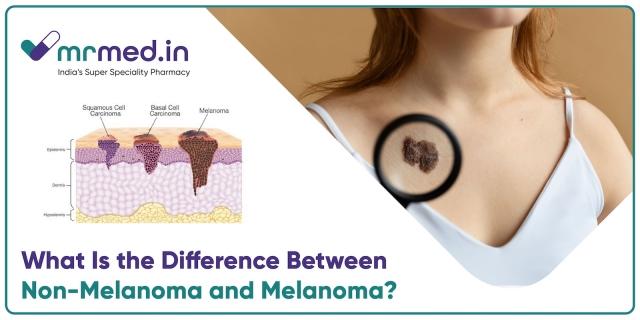
Skin cancer is among the most common cancers globally, impacting millions of individuals annually. As we bask in the sun's warmth, it's important to understand the risks linked with excessive sun exposure and the two primary categories of skin cancer: melanoma and non-melanoma.
While both can be serious, they vary significantly in terms of severity, treatment options, and prognosis. Understanding these differences can make individuals to take preventive measures and seek timely medical advice.
How do people usually get skin cancer?
Skin cancer arises when skin cells undergo genetic mutations, often due to ultraviolet (UV) radiation from the sun or tanning beds. While there are several types of skin cancer, melanoma and non-melanoma cancers—comprising basal cell carcinoma and squamous cell carcinoma are the most common.
Melanoma is the more aggressive form, capable of spreading to other parts of the body if not detected early. Non-melanoma skin cancers, on the other hand, tend to grow more slowly and usually do not metastasise.
What is Melanoma?
Melanoma develops in the melanocytes, the cells responsible for producing melanin, which provides the skin its colour. This type of cancer can look like a new mole or a change in an existing mole. The hallmark features of melanoma include asymmetry, irregular borders, multiple colours, a diameter larger than six millimetres, and any changes over time.
What are the risk factors for melanoma?
Many factors can raise the risk of developing melanoma, including:
- Ultraviolet exposure: Prolonged exposure to UV radiation is a significant risk factor.
- Skin type: Individuals with fair skin, light hair, and light eyes are at more elevated risk.
- Family history: A family history of melanoma increases susceptibility.
- Personal history: Individuals with a previous diagnosis of melanoma or atypical moles are at greater risk.
What are the treatment options for melanoma?
Timely diagnosis and therapy are important for improving outcomes in melanoma patients. The primary treatment modalities include:
- Surgical excision: Removal of the tumour and surrounding skin is often the first line of defence.
- Immunotherapy: Treatments with Keytruda 100mg Injection, which contains the active ingredient Pembrolizumab, enhance the body's immune response to fight cancer.
- Targeted therapy: This involves medications that target specific genetic mutations within melanoma cells.
- Chemotherapy: While less common due to the effectiveness of newer treatments, chemotherapy may still be used in some cases.
What is non-melanoma skin cancer?
Non-melanoma skin cancers primarily refer to basal cell carcinoma (BCC) and squamous cell carcinoma (SCC). These types are more common than melanoma and are generally less aggressive.
- Basal cell carcinoma (BCC): BCC arises from the basal cells in the skin's outer layer. It appears as a shiny, pearly bump or a flat, scar-like lesion. BCC rarely metastasises but can cause significant local damage if untreated.
- Squamous cell carcinoma (SCC): SCC develops from squamous cells, which are flat cells found on the skin's surface. It often looks like a firm, red nodule or a flat sore that crusts or bleeds. SCC has a higher risk of spreading compared to BCC but is still generally less aggressive than melanoma.
Risk factors for non-melanoma skin cancers
Similar to melanoma, non-melanoma skin cancers are influenced by various risk factors, including:
- UV radiation: Chronic sun exposure significantly increases the likelihood of developing BCC and SCC.
- Age: The risk increases with age due to cumulative sun exposure and skin changes over time.
- Skin type: Light-skinned individuals are at higher risk.
- Weakened immune system: People with compromised immune systems, such as organ transplant recipients, face greater risks.
What is the treatment for non-melanoma skin cancers?
Non-melanoma skin cancers are usually treatable, especially when detected early. Common treatment approaches include:
- Surgical removal: The most effective treatment for both BCC and SCC is surgical excision.
- Cryotherapy: Freezing the tumour cells with liquid nitrogen can be effective for superficial lesions.
- Topical chemotherapy: Creams containing chemotherapeutic agents can be used for superficial BCC and SCC.
- Photodynamic therapy: This involves using light and a photosensitising agent to destroy cancer cells.
Prevention: your best defence against skin cancer
Understanding the differences between melanoma and non-melanoma skin cancers highlights the importance of prevention. Here are some effective strategies:
- Sun protection: Use broad-spectrum sunscreen with a high SPF, wear protective clothing, and find shade during peak sunlight hours.
- Regular skin checks: Self-exams and dermatological screenings can help detect changes early.
- Avoid tanning beds: Artificial UV exposure increases the risk of all skin cancers.
Wrapping up
Understanding the distinctions between melanoma and non-melanoma skin cancers is vital for effective prevention and treatment. While melanoma poses a more significant threat, non-melanoma cancers are also serious and can lead to complications if left untreated. Being proactive about skin health—through protection, early detection, and appropriate treatments—can significantly improve outcomes.
In a world where our skin is constantly exposed to the elements, knowledge truly is power. Whether it's a new mole or a persistent sore, being aware of what to look for and seeking medical advice promptly can save lives.